

In a conventional business process, many important decisions remain primarily within the organization and its established network of suppliers, partners, investors, distributors, and other professional stakeholders. A company identifies an opportunity, develops a product or service, commits resources, organizes production, defines a price, and brings the offer to market. Customers sometimes influence earlier stages through research, testing, or feedback, although their financial commitment usually occurs later.
Several important business decisions therefore happen before confirmed demand. A manufacturer decides how many units to produce, a publisher decides how many books to print, and a farmer decides what to plant and how much land to use. A restaurant buys ingredients before knowing exactly what customers will order. Each organization uses forecasts, previous sales, market research, contracts, or professional judgment to reduce uncertainty while the final purchasing decision comes later.
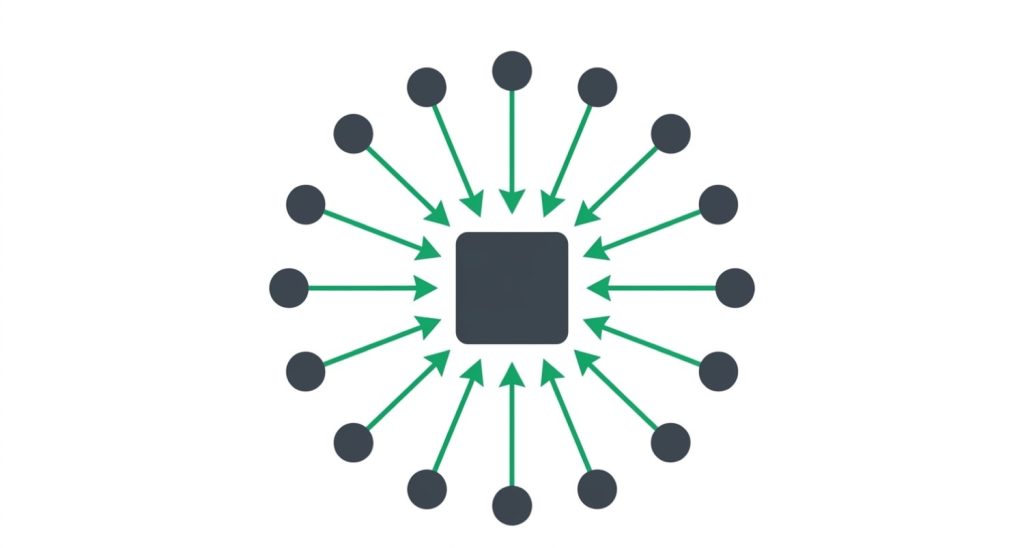
The crowd economy expands the number of people who contribute directly to these business activities. Instead of limiting participation to a final purchase, organizations receive money, demand, knowledge, ideas, work, data, access to assets, feedback, or other resources from groups outside their conventional internal structure. Crowdfunding and crowdsourcing are established examples, while similar participation appears in community-supported production, collective purchasing, peer-to-peer models, co-creation, pre-sales, subscriptions, and other structures.
The people involved also extend beyond customers. Depending on the model, the crowd consists of citizens, investors, users, professionals, creators, local residents, producers, supporters, or people connected by a shared objective. The number of participants alone tells us little about their role. The analysis needs to identify what they contribute and which decision or activity changes because of that contribution.
A company developing a new mobility service illustrates the range of possibilities. One group of people could provide funding through a crowdfunding campaign, while another group contributes ideas about accessibility through a co-creation process. Local residents provide information about transport problems in their neighborhoods, future users reserve the service before launch, and people with vehicles provide assets through a peer-to-peer model. Each form of participation gives the organization something different and affects a different business decision.
The Organisation for Economic Co-operation and Development provides a useful example of this wider participation through its definition of crowdsourcing. The OECD describes crowdsourcing as using expertise and ideas from a crowd and explains that participation can involve expert groups, targeted stakeholders, or a wider public. Contributions take place through digital platforms or in-person activities, which also demonstrates that crowd participation does not depend on a digital platform (OECD Guidelines for Citizen Participation Processes).
A small producer planning a first production run of 5,000 units illustrates another form of participation. Under a conventional model, the producer estimates demand, finances production, manufactures the units, and then sells them. If only 2,000 units sell, the remaining stock represents money and resources already committed. If demand reaches 8,000 units, the producer faces the opposite problem and loses potential sales while arranging another production run.
If 1,500 customers reserve the product before production starts, those reservations provide direct evidence of demand. If 500 people instead contribute ideas about how the product should work, the organization receives knowledge rather than confirmed demand. If 300 people finance the project through an investment-based crowdfunding arrangement, their contribution changes the financing structure. All three examples use participation from a group, although they address different business needs.
This gives us a broader way to examine the crowd economy throughout the course. We need to identify:
- Who participates and why?
- What do they contribute?
- When do they contribute it?
- What changes because of the contribution?
- What do they receive or influence?
Earlier customer commitment remains one important mechanism because it connects demand with decisions that would otherwise happen before a sale, while other forms of participation provide different resources.
One applied case in this topic will show how several of these mechanisms operate together. Naranjas del Carmen developed a tree-adoption model in response to agricultural, financing, demand, and distribution challenges. CrowdFarming subsequently developed from that experience and extended several of the underlying mechanisms to other producers. The case provides a concrete example of how different forms of crowd participation can become part of one business model.
The central focus for this topic is to examine what changes when a group of people participates directly in a business activity that would otherwise remain primarily inside the organization or its conventional value chain. The answer depends on the contribution because money changes financing, reservations provide demand information, ideas contribute knowledge, assets provide supply, collective purchasing combines demand, and peer participation changes who produces or delivers value.